PrO2+ is on the App Store. Download the companion app today for iPhone or Android to pair with your device and train anywhere.
Test of Incremental Respiratory Endurance (TIRE)
Decades of positive outcomes built on proven musculoskeletal training principles—applied to the muscles of breathing.
The Test of Incremental Respiratory Endurance (TIRE) is a structured approach to respiratory muscle training. It applies established strength-training ideas to the muscles you breathe with—using fixed resistance that still adapts to what each person can do on a given day.
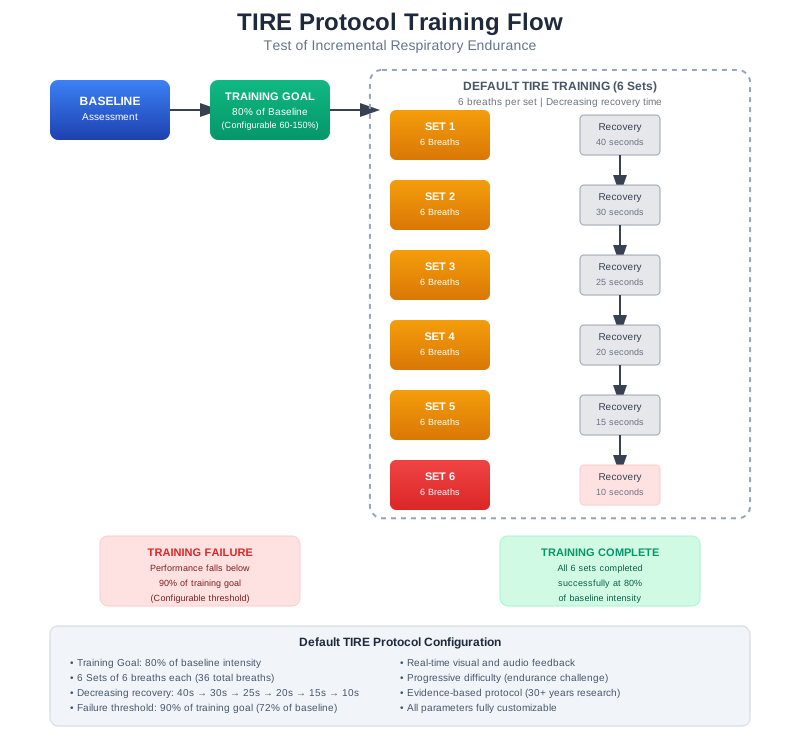
Training starts from sustained maximum inspiratory pressure (SMIP) to set that day’s baseline. A standard session is six sets of six breaths at about 80% of SMIP, with rest intervals that shorten from set to set. The aim is to work the respiratory muscles toward fatigue so the body adapts—without guessing loads for every individual.
This model is backed by clinical work showing gains in strength, endurance, and breathing function. It works well in practice because:
- Training is tied to what someone can do that day (daily baseline).
- A session completes after 36 breaths or when targets are not met—clear stopping rules.
- You don’t need a unique protocol for every patient or athlete to start.
- TIRE gives objective tracking of respiratory performance over time.
How to perform each maneuver
The v2 site includes the same step-by-step guidance as the PrO2 app’s “How to perform” screens: MIP, MEP, SMIP, and SMEP for both assessment and training—including seal, effort, rest, and repetition.
Training flow
Visual overview of how a TIRE session is organized.